

Business Technology Acronyms You Need To Know


The meeting was going fine until someone suggested integrating your CRM with a SaaS platform through an API. You nodded. It seemed safer.
Technology conversations have a way of turning into alphabet soup, leaving business owners to sort out which letters deserve their attention—and their budget.
You don’t need to memorize an entire glossary. Start with these five acronyms that connect directly to how your business serves customers, buys software, protects information, and gets work done.
CRM: Customer Relationship Management
What it means: Software that organizes information about customers and prospects, including contact details, conversations, purchases, and sales opportunities.
Why it matters: When customer information lives in scattered spreadsheets, inboxes, and someone’s memory, follow-through gets harder. A CRM gives your team a shared record, so customers don’t have to start from scratch whenever they talk to someone new.
For a growing contractor, that could mean tracking an inquiry from initial call through estimate, installation, and follow-up.
Ask before buying: Will employees actually use it? A straightforward system your team maintains is more useful than an elaborate one everyone avoids.
SaaS: Software as a Service
What it means: Software delivered over the internet, typically through a subscription. Many accounting, scheduling, collaboration, and CRM tools use this model.
Why it matters: SaaS can give small businesses access to useful tools without installing and maintaining everything themselves. The provider generally manages the underlying software and updates.
But convenience deserves a little homework. Subscription costs accumulate, features vary by plan, and your business needs a way to retrieve its information if you leave.
Ask before subscribing: What’s included, how does pricing change as we grow, and can we export our data in a usable format?
MFA: Multifactor Authentication
What it means: A sign-in process requiring two or more different types of proof that you’re really you. That might combine a password with an authenticator app or security key.
Why it matters: A stolen password alone may be enough to compromise an account without this added protection.
Prioritize MFA for business email, financial accounts, administrative access, and systems holding sensitive customer information. When available, consider phishing-resistant options such as security keys or properly implemented passkeys.
Ask your technology provider: Which accounts still lack MFA, and how will employees recover access if a device is lost?
API: Application Programming Interface
What it means: A defined way for software systems to exchange information or request actions from one another.
Why it matters: APIs can help your business tools work together. An online order might flow into inventory software, for example, reducing manual entry.
However, “there’s an API” doesn’t necessarily mean connecting two products is simple or included in the price. Setup, maintenance, and access permissions still matter.
Ask before connecting: Is there a supported integration, who maintains it, and what happens if the connection fails?
SLA: Service-Level Agreement
What it means: An agreement defining specific service commitments, how they’re measured, and what remedies may apply if they aren’t met.
Why it matters: Terms such as “reliable” and “responsive” sound reassuring. An SLA helps establish what a provider is actually committing to deliver.
For internet, hosting, or IT support, review the details carefully. A response-time commitment, for instance, doesn’t necessarily promise a resolution within that time.
Ask before signing: What’s covered, what’s excluded, and what must we do to request a remedy?
You don’t have to become the office technology expert. You do need enough understanding to ask useful questions. And “What does that stand for?” remains an excellent place to start.
Sidebar: A Few More Letters Worth Knowing
- ISP — Internet Service Provider: The company connecting your business to the internet, such as Sparklight Business.
- VoIP — Voice over Internet Protocol: Technology that carries voice calls over an internet connection.
- VPN — Virtual Private Network: Creates an encrypted connection between your device and a VPN endpoint.
- POS — Point of Sale: The system used to complete sales and accept payments.
- UPS — Uninterruptible Power Supply: Provides temporary battery power to connected equipment when electrical power fails.
- SSO — Single Sign-On: Lets employees access multiple applications through a central sign-in.

The trends, insights, and solutions you need to grow your business.
By signing up, you’re subscribing to our monthly email newsletter, The
Wire. You may unsubscribe at any time.
Your information stays safe with us. Learn more about our privacy
policy.

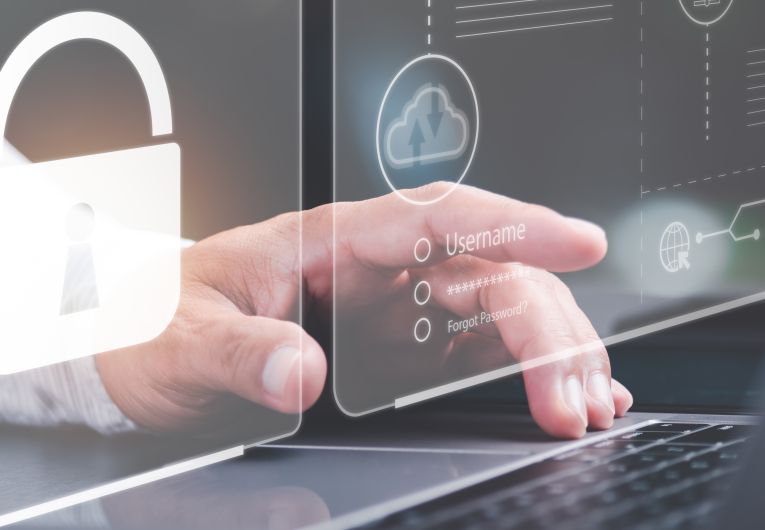




A Strategic Guide for Protecting Your Small Business
This ebook on cybersecurity is designed to arm you with the tools and knowledge needed to make your business less of a target for hackers.
When you submit this form, you’ll receive our monthly newsletter, The Wire, which contains trends, insights, and solutions you need to grow your business. We’ll also email you product information and special offers. You may unsubscribe at any time.
Your information stays safe with us.
Learn more about our privacy
policy.